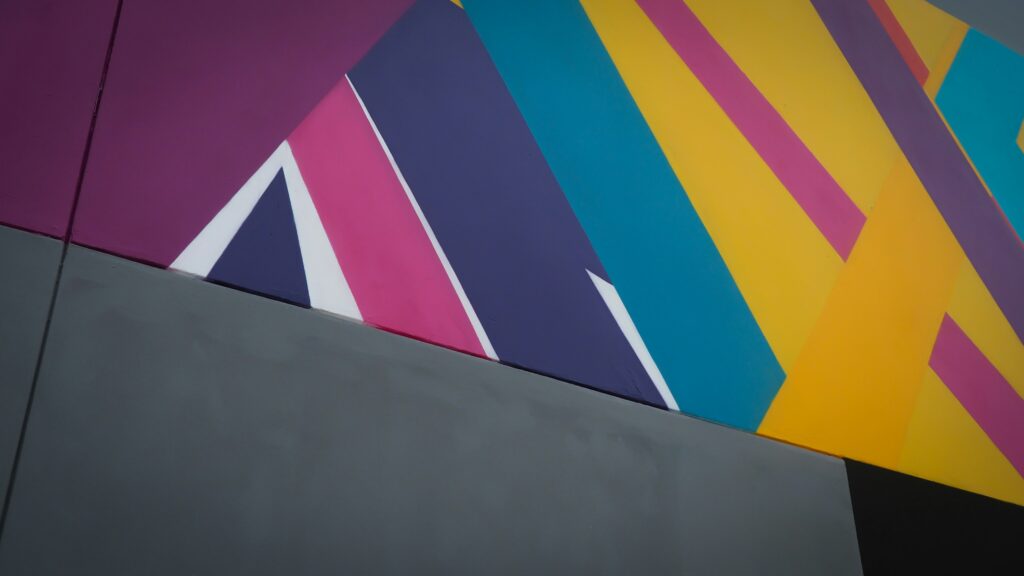

Breaking the Mold of 20th Century Giants
Rothko, Pollock, de Kooning they built the bones of Abstract Expressionism, trading tradition for emotion and turning the canvas into a battlefield. Their work was primal, messy, revolutionary. For decades, their fingerprints were the standard, the mold that defined what abstraction could be.
But every movement has to evolve or it calcifies. Today’s artists stand on that foundation, and many are choosing to break it apart piece by piece. Not from disdain, but from a hunger to speak in their own language. They’re borrowing the spirit but ditching the rules embracing spontaneity and emotion without being chained to mid century gestures or forms.
There’s a tension here. How do you honor the greats while stating something new? Some paint with Rothko’s quiet intensity, but in pixels. Others channel Pollock’s chaos using industrial materials or digital noise. It’s not a rejection it’s a remix. The homage is still there, buried under layers of grit and modern context. And in that friction between legacy and now, a new wave of expression is taking shape.
Techniques Getting a Reboot
Contemporary abstract artists are no longer bound to oil paint and flat surfaces. The medium has cracked wide open literally. Instead of stretching canvas, artists are wiring LEDs into steel grids, sewing thread through plastic sheeting, and constructing rooms as immersive, walk in compositions. The goal isn’t shock value it’s to disorient the default ways we look, move, and feel around art.
These unconventional materials do more than just switch up aesthetics. A steel sculpture bends light differently than a painted wall does. A room soaked in colored fog pulls viewers into a sensory experience that static images can’t replicate. LED pixels flickering in chaotic code become brushstrokes in motion.
It’s not just about what tools are used, though it’s how they’re used. Layering media until the surface nearly collapses, distorting familiar shapes until they’re emotionally charged, erasing parts of a piece to build tension instead of clarity these are the tactics of controlled chaos. The work may look spontaneous, even violent, but it’s crafted. It’s abstraction fine tuned to hit hard and stay raw.
Social Commentary in Color and Chaos

Abstract Expressionism has always thrived in ambiguity, but today’s artists are using that ambiguity with intent. In a landscape where identity is politicized and activism is non negotiable, abstraction lets creators speak openly without spelling everything out. There’s power in not being explicit.
Modern abstract artists are tackling subjects like race, gender, and climate not by illustrating them literally, but by letting their materials, their gestures, and their choices do the talking. A spattered canvas might evoke environmental decay. Stark color contrasts can mirror the tension of racial or gendered experiences. It’s not what you see it’s what you feel when you see it. The lack of a fixed narrative opens up space for viewers to bring their own lived context to the work.
This isn’t subtle for subtlety’s sake. It’s strategy. In a world overloaded with content and causes, abstraction offers a moment of pause a more visceral, less didactic expression of the personal and political. It demands interpretation. It invites discomfort. And that’s the point.
From Obscure to Marketable
For years, modern abstract artists operated on the fringes, admired by niche circles but largely dismissed by the mainstream art market. That perspective is shifting quickly.
Shifting Market Trends
Collectors are increasingly drawn to new voices in abstract expressionism. What was once seen as inaccessible or overly avant garde is now viewed as emotionally sophisticated and culturally relevant.
Emerging artists are gaining traction at major auction houses
Independent galleries are spotlighting work that feels urgent, raw, and unconventionally beautiful
Younger collectors value emotional narrative and material experimentation over tradition
The Economics of Emotion
Texture rich, emotionally intense artworks are fetching higher prices and not just for aesthetics. Buyers are starting to recognize the depth of technique and the socio political messages embedded in modern abstraction.
High impact materials (textile, resin, LED, recycled elements) raise perceived value
Artworks with visible process layering, scratching, erasure convey authentic emotion
Collectability isn’t just about beauty; it’s about embodied experience
Learn More
For a deeper look at what drives the value of today’s modern artworks, explore this detailed breakdown: Why Do Paintings Sell for So Much?
The Digital Frontier of Abstraction
In 2024, the canvas isn’t dead it’s just pixelated. As abstract expressionism collides with tech, artists are moving their work onto screens and into smart contracts. NFTs are more than collectibles now; they’ve become vehicles for experimentation. Think controlled chaos encoded on a blockchain. Think emotion rendered in algorithms.
AI generated works throw the question of authorship into the fire. Who made this an artist, a computer, or both? It’s not just aesthetic mimicry. Artists are feeding models trained on their styles, nudging randomness toward intent. When a bot ‘paints’ a stroke by stroke haze or glitchscape, it’s programmed spontaneity. The result: a new kind of abstraction where intention and accident are coded together.
The digital space, too, is transforming how we experience these works. We’re moving past traditional gallery walls to online platforms that curate art like moods. Screensavers are exhibits. Virtual worlds are installations. And collectors? They’re buying JPGs that act like brushstrokes with provenance.
This is abstraction untethered fluid, shareable, and still deeply human, even when machines have a hand in it.
Redefining the Value of Emotion
In a world where speed dominates and polish is expected, a new wave of abstract artists is doing the opposite pulling emotion back into focus. Not with grand gestures or twisted theory, but with raw instinct. Messy brushwork, unfinished lines, violence in color these choices aren’t mistakes. They’re statements.
For these artists, emotion isn’t decorative. It’s the point. The goal isn’t to impress with legacy or technique, but to cut straight to the nervous system. Crying on canvas? Kind of. What sells now isn’t lineage it’s immediacy. Relevance. The work says, “This is what I felt today. And maybe you did too.”
Collectors are catching on. Pieces that might’ve been too chaotic or personal a decade ago are now front and center at mid tier galleries and digital auctions. It’s not about who taught you, but whether you can break through the noise with something honest.
For a few artists, legacy still matters. But for many coming up now, relevance wins. Today’s art scene isn’t waiting for validation from institutions. It’s moved on.
(More insights on the value of modern art)
 There is a specific skill involved in explaining something clearly — one that is completely separate from actually knowing the subject. Danielo Hawspheres has both. They has spent years working with inspiration and resources in a hands-on capacity, and an equal amount of time figuring out how to translate that experience into writing that people with different backgrounds can actually absorb and use.
Danielo tends to approach complex subjects — Inspiration and Resources, Artistic Trends and Insights, Cultural Art Events being good examples — by starting with what the reader already knows, then building outward from there rather than dropping them in the deep end. It sounds like a small thing. In practice it makes a significant difference in whether someone finishes the article or abandons it halfway through. They is also good at knowing when to stop — a surprisingly underrated skill. Some writers bury useful information under so many caveats and qualifications that the point disappears. Danielo knows where the point is and gets there without too many detours.
The practical effect of all this is that people who read Danielo's work tend to come away actually capable of doing something with it. Not just vaguely informed — actually capable. For a writer working in inspiration and resources, that is probably the best possible outcome, and it's the standard Danielo holds they's own work to.
There is a specific skill involved in explaining something clearly — one that is completely separate from actually knowing the subject. Danielo Hawspheres has both. They has spent years working with inspiration and resources in a hands-on capacity, and an equal amount of time figuring out how to translate that experience into writing that people with different backgrounds can actually absorb and use.
Danielo tends to approach complex subjects — Inspiration and Resources, Artistic Trends and Insights, Cultural Art Events being good examples — by starting with what the reader already knows, then building outward from there rather than dropping them in the deep end. It sounds like a small thing. In practice it makes a significant difference in whether someone finishes the article or abandons it halfway through. They is also good at knowing when to stop — a surprisingly underrated skill. Some writers bury useful information under so many caveats and qualifications that the point disappears. Danielo knows where the point is and gets there without too many detours.
The practical effect of all this is that people who read Danielo's work tend to come away actually capable of doing something with it. Not just vaguely informed — actually capable. For a writer working in inspiration and resources, that is probably the best possible outcome, and it's the standard Danielo holds they's own work to.