Moving Expressionism Forward
Expressionism was never just about depicting the world it was about distorting it, twisting color and form to get to the rough core of human emotion. For too long, that lens was shaped almost exclusively by male perspectives. But that’s changing. A new wave of women artists is taking hold of expressionism and widening its meaning. They’re not asking permission they’re reframing the whole conversation.
What does that look like? Less artifice, more honesty. These artists use abstraction and fragmentation not as formal devices, but as ways to tell deeply personal narratives. Trauma, joy, grief, defiance nothing is off limits, and it’s not about theoretical purity. It’s about wearing the truth, even when it’s raw and uncomfortable.
By leaning into emotion and lived experience, women in expressionism are shifting power away from tradition and toward inclusion. The personal becomes political by default. Their works aren’t just updates to a style they’re direct challenges to who gets to define belonging in the art world. This wave isn’t just important; it’s overdue.
Cross Cultural Perspectives
Expressionism has never stayed put. In the hands of today’s female artists, it crosses borders, languages, and lived experiences. Artists from South Asia, the Middle East, Africa, and Latin America are reinterpreting expressive forms not as a reaction to European movements, but as something entirely their own rooted in local traditions, personal history, and political urgency.
Themes like identity, displacement, and resistance pulse through the work. It’s not just about aesthetics it’s about survival, about reclamation. A painting might speak to migration across oceans or emotional labor passed through generations. These aren’t side stories; they’re the core of expressionism now. That vulnerability, that intensity of internal and external pressure, is what gives the work its charge.
More critically, these voices aren’t waiting for validation from legacy institutions. Many of the most compelling expressionists today hail from places underrepresented in glossy art books, yet they’re shaping global conversations from Nairobi studios and Bogotá pop ups to digital collectives in Kuala Lumpur and Beirut. Their message is clear: expression isn’t exported from the center anymore. It starts wherever someone decides to make it heard.
Techniques That Tell Stories

In contemporary expressionism, technique is far more than method it’s a language. Female artists are leveraging material choices and stylistic approaches to communicate personal narratives, emotional depth, and cultural critique. Their process often speaks louder than the finished image.
Communicating Through Materials
Many female expressionists are embracing hands on, tactile methodologies to give their stories texture literally.
Mixed media works combine photography, collage, textiles, and unconventional materials to blur the line between life and art.
Layering techniques create complexity, suggesting the many levels of identity, memory, and emotion.
Textured brushwork becomes a direct extension of the artist’s mood, body, or impulse.
These material explorations serve as powerful vehicles for self expression, moving beyond traditional formalism.
Symbolism and Visual Tension
Modern expressionists are shifting away from literal representation. Instead, they use visual tension to express psychological and emotional truths.
Symbolism rooted in personal, cultural, or political imagery creates layered meaning within seemingly abstract forms.
Intentional distortion challenges realism, allowing artists to prioritize feeling over fact.
Vivid, often confrontational color palettes evoke emotion more immediately than detail or realism ever could.
Together, these choices construct a visual vocabulary that’s both deeply individual and widely resonant.
Emotion Over Representation
What sets contemporary expressionists apart is their prioritization of process. For many, the act of painting or creating is inseparable from the emotional experience itself.
The emotional arc of creation hesitation, impulsivity, erasure, rebuilding remains visible in the work.
The piece may not depict a ‘scene’ but offers a map of the artist’s inner world.
Movements, gestures, and marks are valued for their honesty, not their accuracy.
In this way, modern female expressionists uphold expressionism’s roots while expanding its possibilities using technique not just to depict, but to reveal.
Spotlight on Impactful Works
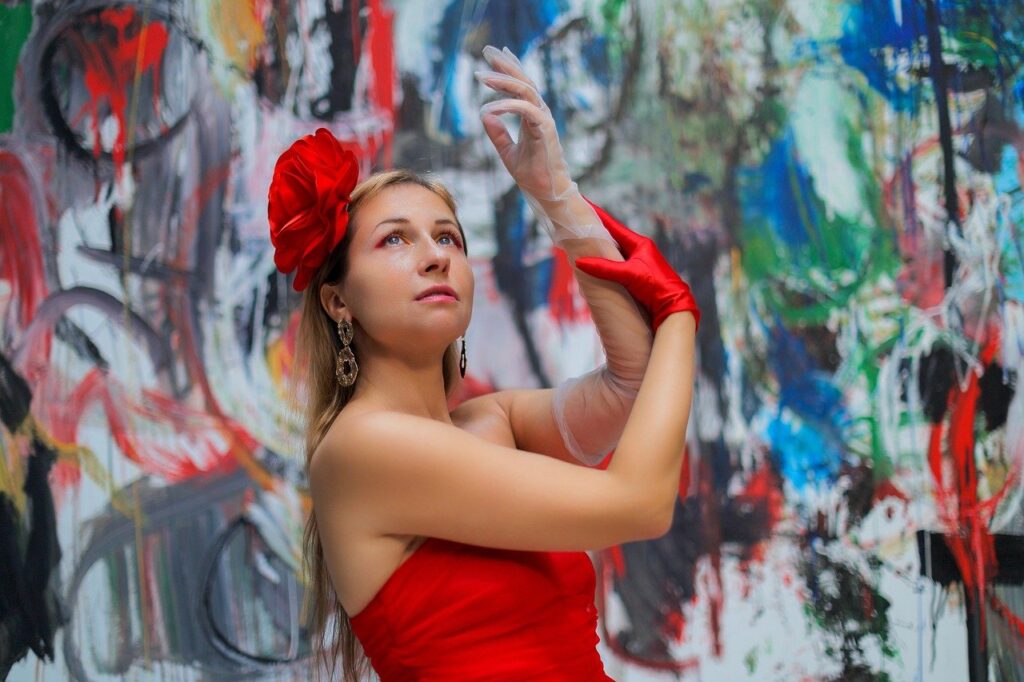
What does pushing the edges of expressionism look like today? Walk through the featured painting gallery and you’ll find your answer not in tidy captions or art school jargon, but in bursts of honesty, grit, and personal truth. These are works made by women who aren’t waiting around for approval. They’re responding to what they’ve lived: displacement, trauma, joy, rage, healing.
Take a closer look and the traditional rules start to crumble. Canvases bleed outside their borders. Faces refuse symmetry. Colors clash on purpose. It’s not chaos it’s intentional friction. These pieces aren’t interested in being decoded by theory. They ask you to feel first, think later. That’s the point.
What connects these works most isn’t their style but their urgency. You’re not meant to observe from a distance. You’re meant to recognize something lived in the texture, the distortion, the absence of polish. Academic meaning has its place, but here, experience leads. Raw, specific, unapologetic.
Expressionism isn’t being preserved. It’s being redefined in real time, on real walls.
Navigating the Art World
Institutional recognition for female expressionists has made some gains but the pace is uneven. Major museums are starting to feature more solo shows by women, yet the permanent collections still tell an outdated story. Market pricing reflects the same lag. Auction results and gallery representation continue to favor male artists, especially when it comes to expressionism’s traditional heavyweights.
Visibility is another hurdle. Media coverage and critical writing often overlook female led expressionist work, especially when it challenges conventional aesthetics or politics. That leaves many artists building careers off the radar of mainstream institutions. It also means that their impact is undercounted even when the work hits hard and moves culture forward.
This is where independent platforms and online communities step in. Artists are using curated Instagram accounts, decentralized galleries, and art focused social networks to connect directly with audiences who care. These channels bypass gatekeepers, letting expressionists show raw, emotional, and genre bending work on their own terms.
The featured painting gallery captures this shift in real time. It’s not just about exposure it’s about rewriting who gets to define the canon of contemporary expressionism. Progress is happening, but it’s being driven from the ground up. That says a lot.
What’s Ahead in Expressionist Dialogue
A new wave of female artists is pushing expressionism past its traditional boundaries not by abandoning emotion, but by sharpening it into something politically charged and culturally fluent. Their work doesn’t just feel, it questions. You’ll see themes like generational trauma, systemic inequality, and climate anxiety wrapped in installations that demand space, digital works that refuse permanence, and performances that break comfort zones.
These artists aren’t tacking on relevance they’re rebuilding what expressionism can contain. Instead of canvases framed neatly on white walls, we’re seeing immersive environments fueled by raw feeling and commentary. The personal becomes structural. The metaphor turns into action. Emotion becomes critique.
Technology is part of this shift too. Digital tools, social platforms, and augmented reality aren’t gimmicks they’re extensions of message and form. Think VR pieces that trap the viewer in cycles of social media burnout, or gesture based installations about surveillance. The medium follows the meaning.
Expressionism isn’t fading it’s transforming. And women are leading the charge into its most radical chapter yet.
 Zyphren Kryndall is the kind of writer who genuinely cannot publish something without checking it twice. Maybe three times. They came to inspiration and resources through years of hands-on work rather than theory, which means the things they writes about — Inspiration and Resources, Creative Techniques and Tutorials, Gallery Exhibitions and Reviews, among other areas — are things they has actually tested, questioned, and revised opinions on more than once.
That shows in the work. Zyphren's pieces tend to go a level deeper than most. Not in a way that becomes unreadable, but in a way that makes you realize you'd been missing something important. They has a habit of finding the detail that everybody else glosses over and making it the center of the story — which sounds simple, but takes a rare combination of curiosity and patience to pull off consistently. The writing never feels rushed. It feels like someone who sat with the subject long enough to actually understand it.
Outside of specific topics, what Zyphren cares about most is whether the reader walks away with something useful. Not impressed. Not entertained. Useful. That's a harder bar to clear than it sounds, and they clears it more often than not — which is why readers tend to remember Zyphren's articles long after they've forgotten the headline.
Zyphren Kryndall is the kind of writer who genuinely cannot publish something without checking it twice. Maybe three times. They came to inspiration and resources through years of hands-on work rather than theory, which means the things they writes about — Inspiration and Resources, Creative Techniques and Tutorials, Gallery Exhibitions and Reviews, among other areas — are things they has actually tested, questioned, and revised opinions on more than once.
That shows in the work. Zyphren's pieces tend to go a level deeper than most. Not in a way that becomes unreadable, but in a way that makes you realize you'd been missing something important. They has a habit of finding the detail that everybody else glosses over and making it the center of the story — which sounds simple, but takes a rare combination of curiosity and patience to pull off consistently. The writing never feels rushed. It feels like someone who sat with the subject long enough to actually understand it.
Outside of specific topics, what Zyphren cares about most is whether the reader walks away with something useful. Not impressed. Not entertained. Useful. That's a harder bar to clear than it sounds, and they clears it more often than not — which is why readers tend to remember Zyphren's articles long after they've forgotten the headline.