Neo Figurative Expressionism is Back
Neo Figurative Expressionism is seeing a striking resurgence in the 2020s, as artists turn away from hyper polished aesthetics and lean into raw, emotionally charged portrayals of the human experience.
A Human Centric Reawakening
Rather than adhering to academic precision or photorealism, this movement prioritizes narrative power and emotional depth:
Portraiture returns to center stage, but not in its classical form these figures are often distorted, layered, or incomplete
Visceral emotional storytelling overrides technical polish
Expressive brushstrokes, vibrant palettes, and hurried textures mirror internal states over external likeness
Where It’s Thriving
This resurgence is not limited to gallery walls. Neo Figurative Expressionism is finding a strong foothold in:
Digital illustration, as creators blend glitch aesthetics with traditional portraiture
Street art, with urban scenes overtaken by emotionally raw, large scale figures
NFT platforms, where narrative depth and human themes are gaining traction in contrast to abstract or generative norms
Why It Matters Now
In a world of curated feeds and airbrushed realities, the bold imperfections of this style offer a refreshing and often uncomfortable dose of humanity. Artists are using it to confront social issues, personal trauma, and collective identity in real time.
Neo Figurative Expressionism isn’t just a throwback it’s a protest, a therapy, and, for many, a way back to something real.
Hyper Surrealism on Digital Canvas
The surrealists wanted to bend reality. Hyper surrealism takes it and snaps it in half then sharpens the edges in 8K.
This style fuses old world dream logic with today’s rendering muscle. Think melting skies, impossible architecture, a face turned inside out cleanly lit and impossibly crisp. It’s dream imagery on steroids, where fantasy doesn’t blur but sharpens. Ultra HD detail gives each hallucination volume, structure, and visual punch.
You’ll see it all over high impact visual media: album covers that look like simulations, editorial spreads that bend scale and gravity, posters that blur the line between painted and programmed. Graphic designers and illustrators are riding this wave hard building out portfolios that feel more like lucid dreams than commercial work.
The tools have caught up to the imagination. With AI enhancers, 3D modeling suites, and photorealistic rendering engines, digital artists aren’t asking “what’s possible” anymore they’re asking “what’s never been seen?” And audiences can’t look away.
Eco Aesthetic and Post Nature Concepts
As global awareness of ecological collapse continues to rise, artists are responding with a renewed commitment to climate concerned aesthetics. This movement is less about passive observation and more about active visual commentary shaped by sustainability, regeneration, and speculative futures.
Art Rooted in Environmental Awareness
Many creators today look beyond representation to embrace purpose driven materials and messages. Their work often underscores the urgency of environmental issues while exploring what “nature” even means in a digitally saturated world.
Themes influenced by climate change, extinction, and urban decay
Materials sourced sustainably from recycled plastics to organic dyes and decomposable substrates
Installations designed to provoke reflection on consumption and ecological imbalance
The Rise of Regenerative & AI Imagined Landscapes
A growing number of artists combine eco conscious practices with generative technologies to imagine futures that oscillate between dystopia and renewal.
Use of AI to model rewilded or post human ecosystems
Digital futurescapes depicting lost or altered biomes
Artwork that speculates on nature’s evolution beyond human impact
Where This Art Lives
This genre is increasingly visible in large scale public works and curated exhibitions focused on environmental urgency. These pieces are not only featured in traditional galleries but also appear in unexpected locations such as:
Eco focused art festivals and biennials
Public parks and reclaimed industrial zones
Digital installations in web based galleries and virtual museums
Eco aesthetic art does more than explore beauty it challenges boundaries between activism, science, and creative expression. Whether rendered in soil, code, or canvas, this growing movement asks us to rethink our place in the natural world.
Vaporwave Redux & Internet Nostalgia
Vaporwave never really died it just mutated. What started as a glitchy homage to mall Muzak and busted Windows 95 aesthetics has grown into something more layered. In the 2020s, it’s lo fi meeting generative loops. Artists are taking the familiar pastel grids and VHS static, then feeding them through modern tools like AI remix generators and procedural audio engines. The result: surreal, self aware content that moves rhythmically but feels subversive.
This isn’t nostalgia for the sake of comfort. It’s nostalgia weaponized with irony. Gen Z has latched onto the retro futurist mood not to escape the internet, but to examine it. The style shows up in vapor rendered indie games, looping GIF art dropped as NFTs, and zines filled with scans of faux advertisements for products that never existed. There’s always a knowing tone slick, but soaked in satire.
What keeps vaporwave redux relevant isn’t just its aesthetic. It’s how skillfully it mirrors our fractured digital identities. Each pixelated palm tree or slowed down sax solo isn’t just retro it’s a hint that the past was never as simple as we remember. This revival doesn’t look back. It loops forward.
AI Collaboration and Human Machine Hybridity
Artists are no longer just mastering new tools they’re partnering with them. Machine learning models are being used to co author, co compose, and co imagine artworks across mediums. From AI generated visual prompts to algorithmic brush simulations, the dynamic is shifting from control to collaboration. Instead of seeing technology as a threat, many creators are embracing it as a kind of studio assistant that never sleeps.
But with collaboration comes tension. The question of authorship is louder than ever. If a neural net suggests the next frame of your film or paints ninety percent of your canvas, who signs it? Some artists lean into the ambiguity, framing their work as joint ventures between human intention and machine unpredictability. Others push harder to define boundaries and ensure credit stays human.
What’s clear: we’re entering an era of hybrid aesthetics. Expect to see more collective exhibitions, live coded performances, and digital salons exploring what “post human” creativity actually looks like. Just like photography once faced skepticism as an art form, AI driven practice is now fighting for its seat at the cultural table and it’s getting harder to ignore.
Bold Color Fields and Minimal Maximalism
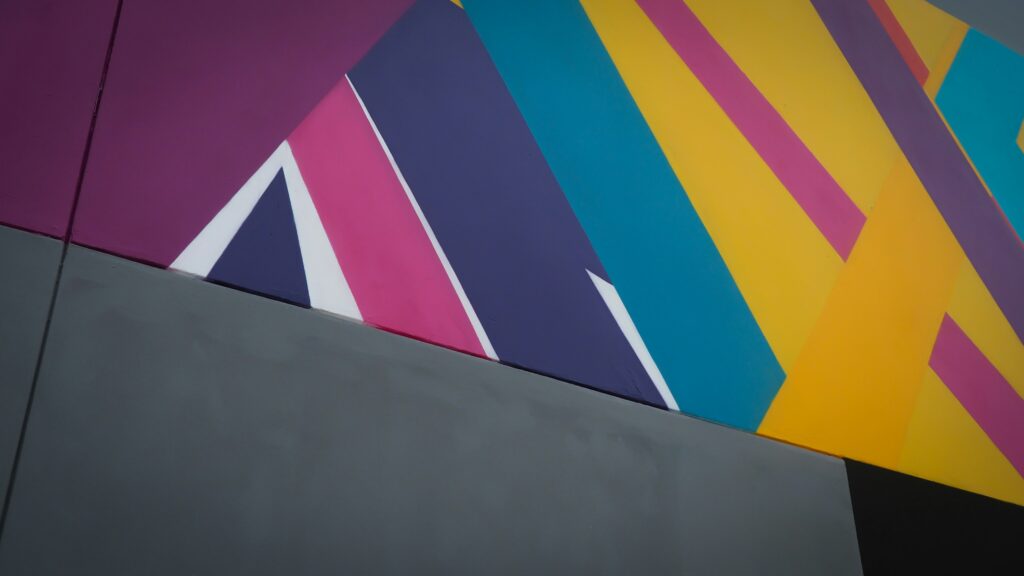
The quiet power of color is getting loud again. Artists are making statements using bold, saturated fields anchored by simple, intentional forms. This isn’t about complexity it’s about clarity. Pigment takes center stage, often spread across large surfaces with little else competing for attention. The result? Work that hits hard without shouting.
This style doesn’t stay inside the frame, either. It blends into sculpture, weaves through textile art, and plays out across immersive installations. Artists are pulling from the clean, confident shapes of 70s modernism, but updating the palette and presentation for a digital native audience used to flat design and sharp gradients. The work feels timeless and of the moment, all at once.
You’ll see it in gallery canvases, wall hangings, even fashion and product design. Fewer elements, more presence. Minimal maximalism is less about what’s there, and more about how confidently it holds the space.
See the Movement up Close
Exploring emerging art styles isn’t just about theory it’s about witnessing them evolve in real time. The arcyart painting collection offers a unique opportunity to do just that.
What You’ll Find
This curated gallery showcases a dynamic fusion of tradition and innovation. It’s a cross section of global artists who are:
Blending classical techniques with digital experimentation
Responding to social, environmental, and technological shifts
Bridging eras through materials, methods, and visual language
Why It Matters
By studying these works, you can:
Examine brushwork up close Understand how texture, layering, and gesture drive modern expressiveness
Analyze material choices From recycled matter to ambient OLED panels, see how artists redefine what “canvas” means
See narrative evolve Through color, scale, or digital augmentation, discover how visual storytelling reflects today’s complex identities and ideologies
This collection is more than a gallery it’s a snapshot of a fast shifting artistic era. Dive in to see how emerging styles are reshaping the visual language of the 2020s.
Where It’s All Going
A New Era of Hybrid Creation
The lines between traditional craftsmanship and cutting edge digital tools are dissolving fast. Artists are no longer choosing between analog and digital many are using both, often within the same work. This hybridization allows for a broader, more experimental visual vocabulary.
Oil paints combined with augmented reality overlays
Hand drawn sketches scanned and stylized with AI
Sculptures embedded with digital sensors or projection mapping
This dual path approach isn’t a fad it’s forming a new standard.
Visual Art’s Expanding Influence
The ripple effects of these styles aren’t confined to galleries anymore. Visual art is shaping everything from fashion lookbooks to mobile interfaces, influencing how we interact with both products and platforms.
Trends to watch:
Branding aesthetics borrowing from surrealist palettes and composition
Fashion collections inspired by glitch art, generative forms, and eco conscious design
UI/UX adopting bold color fields, abstraction, and micro animation influenced by digital art trends
Defining the Decade
Artists driving the 2020s visual language will be those who master the blend those fluent in aesthetic history and fearless in leveraging emerging tools. The task is no longer just to create beauty, but to design relevance across mediums.
Aesthetic dexterity + technical curiosity = cultural impact
Expect cross disciplinary collaborations to increase
The visual leaders of this decade will be those who adapt without diluting their voice
 There is a specific skill involved in explaining something clearly — one that is completely separate from actually knowing the subject. Danielo Hawspheres has both. They has spent years working with inspiration and resources in a hands-on capacity, and an equal amount of time figuring out how to translate that experience into writing that people with different backgrounds can actually absorb and use.
Danielo tends to approach complex subjects — Inspiration and Resources, Artistic Trends and Insights, Cultural Art Events being good examples — by starting with what the reader already knows, then building outward from there rather than dropping them in the deep end. It sounds like a small thing. In practice it makes a significant difference in whether someone finishes the article or abandons it halfway through. They is also good at knowing when to stop — a surprisingly underrated skill. Some writers bury useful information under so many caveats and qualifications that the point disappears. Danielo knows where the point is and gets there without too many detours.
The practical effect of all this is that people who read Danielo's work tend to come away actually capable of doing something with it. Not just vaguely informed — actually capable. For a writer working in inspiration and resources, that is probably the best possible outcome, and it's the standard Danielo holds they's own work to.
There is a specific skill involved in explaining something clearly — one that is completely separate from actually knowing the subject. Danielo Hawspheres has both. They has spent years working with inspiration and resources in a hands-on capacity, and an equal amount of time figuring out how to translate that experience into writing that people with different backgrounds can actually absorb and use.
Danielo tends to approach complex subjects — Inspiration and Resources, Artistic Trends and Insights, Cultural Art Events being good examples — by starting with what the reader already knows, then building outward from there rather than dropping them in the deep end. It sounds like a small thing. In practice it makes a significant difference in whether someone finishes the article or abandons it halfway through. They is also good at knowing when to stop — a surprisingly underrated skill. Some writers bury useful information under so many caveats and qualifications that the point disappears. Danielo knows where the point is and gets there without too many detours.
The practical effect of all this is that people who read Danielo's work tend to come away actually capable of doing something with it. Not just vaguely informed — actually capable. For a writer working in inspiration and resources, that is probably the best possible outcome, and it's the standard Danielo holds they's own work to.